
Let’s be honest, running a business today can feel like trying to upgrade your phone while still using it for calls, texts, and that one app everyone depends on. Technology evolves. Customer expectations shift. Roles change faster than job descriptions can keep up.
That’s why investing in employee upskilling is no longer a “nice-to-have.” It’s a business imperative. And if you’re wondering how to implement upskilling without blowing your budget or overwhelming your team, you’re in the right place.
In this article, we’ll break down practical, cost-effective upskilling strategies, explore upskilling programs for employees, compare upskilling vs reskilling the workforce, and highlight the business benefits of upskilling, all with real-world examples you can actually use.
Why Upskilling Is No Longer Optional
Imagine this scenario:
Your top-performing employee is amazing at client relationships but struggles with new software your company just rolled out. Meanwhile, a competitor trains their team proactively and suddenly delivers faster service with fewer errors. Guess who wins market share?
Upskilling is about closing the skills gap before it becomes a business liability. According to workforce studies, companies that invest in continuous learning see higher employee retention, improved productivity, and stronger leadership pipelines. Translation? Less turnover, fewer headaches, and better results.
How to Implement Upskilling the Right Way (Without Overcomplicating It)
Let’s demystify this. How to implement upskilling doesn’t mean sending everyone to a week-long conference or buying expensive software no one uses. It means being intentional.
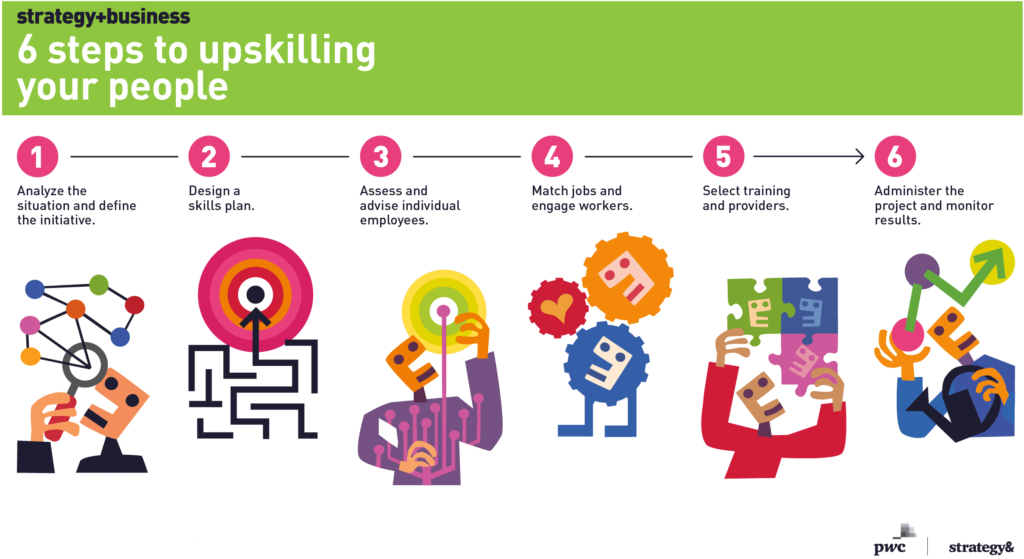
Step 1: Start With a Workforce Skills Assessment
Before you train anyone, you need clarity. A workforce skills assessment helps you answer:
- What skills do we have right now?
- What skills will we need in the next 6–24 months?
- Where are the gaps?
Real-world example:
A mid-sized professional services firm noticed project delays weren’t due to workload, but outdated project management skills. Instead of hiring new staff, leadership invested in targeted training. The result? Faster turnaround times and happier clients.
Step 2: Align Upskilling With Business Goals
Upskilling should support where your business is going, not just what’s trending on LinkedIn.
Ask yourself:
- Are we expanding services?
- Adopting new technology?
- Preparing future leaders?
When learning ties directly to business outcomes, employees see the value, and participation skyrockets.
Step 3: Choose Cost-Effective Upskilling Strategies
Good news: you don’t need a Silicon Valley budget to train like a top-tier organization.
Cost-effective upskilling strategies include:
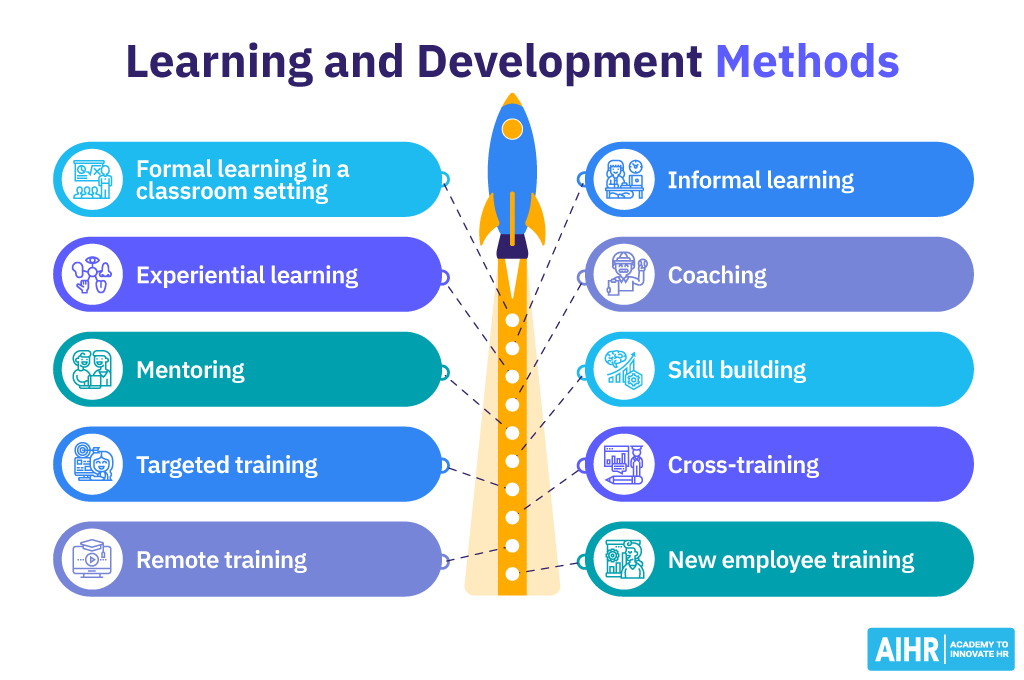
- Online courses and microlearning modules
- Internal mentorship and peer-to-peer learning
- Cross-training between departments
- Leadership development workshops
- Role-specific certification programs
Pro tip: Blended learning (online + real-world application) consistently outperforms one-size-fits-all training.
Upskilling Programs for Employees: What Actually Works
The best upskilling programs for employees are practical, relevant, and flexible.
Popular Program Types That Deliver Results
- Technical Skills Training: Software, data literacy, automation tools
- Leadership & Management Development: Communication, coaching, decision-making
- Human Skills (Yes, They Matter): Emotional intelligence, adaptability, conflict resolution
- Compliance & Process Training: Risk reduction and operational consistency
Scenario in action:
A growing company promoted a strong individual contributor into a manager role without training. Chaos followed. After enrolling new managers in a structured leadership program, engagement improved and turnover dropped within one quarter.
Upskilling vs Reskilling Workforce: What’s the Difference?
This is a question we hear all the time.
Upskilling
- Enhances current skills
- Prepares employees for evolving roles
- Ideal when job functions are expanding
Reskilling
- Teaches entirely new skills
- Prepares employees for different roles
- Useful during restructuring or automation shifts
Think of it this way:
Upskilling is adding features to an app. Reskilling is installing a whole new one.
Both matter, but for most organizations, upskilling delivers faster ROI and boosts morale because employees grow without feeling replaced.
The Business Benefits of Upskilling (a.k.a. Why Your CFO Will Approve This)
Still need buy-in? Let’s talk about the results.
Key Business Benefits of Upskilling
- Higher retention: Employees stay where they grow
- Increased productivity: Skills = efficiency
- Stronger leadership pipeline: Promote from within
- Improved agility: Teams adapt faster to change
- Cost savings: Training often costs less than turnover
Fun but true:
Replacing an employee can cost up to 2x their salary. Upskilling? A fraction of that, and with better vibes.
Overcoming Common Upskilling Challenges
Even great ideas hit roadblocks. Here’s how to sidestep the usual ones.
“We Don’t Have Time”
Short, targeted learning beats long workshops. Microlearning fits into real workdays.
“Employees Won’t Engage”
Tie training to career growth and real outcomes, not just checkboxes.
“We Tried Training Before and It Didn’t Stick”
Learning without application doesn’t work. Build in projects, coaching, and accountability.
Building a Culture of Continuous Learning
Upskilling works best when it’s not a one-off event.
Tips to Make Learning Stick:
- Recognize and reward learning progress
- Encourage leaders to model growth
- Provide clear career pathways
- Make learning part of performance conversations
When learning becomes part of “how we do things,” your organization stays future-ready.
Frequently Asked Questions About Employee Upskilling
What is the first step in how to implement upskilling?
Start with a workforce skills assessment to identify current gaps and future needs aligned with business goals.
Are upskilling programs for employees expensive?
Not necessarily. Many cost-effective upskilling strategies, like online learning, mentoring, and internal training, deliver high ROI without high costs.
How long does it take to see results from upskilling?
Many organizations see improvements in engagement and productivity within 3–6 months when training is applied consistently.
Is upskilling better than hiring new talent?
In many cases, yes. Upskilling existing employees is often faster, more cost-effective, and boosts retention compared to external hiring.
How does upskilling differ from reskilling the workforce?
Upskilling enhances current skills for evolving roles, while reskilling prepares employees for entirely new roles.
Ready to Invest in Upskilling the Smart Way?
Employee growth isn’t a perk—it’s a strategy. When done right, upskilling strengthens your workforce, future-proofs your business, and creates a culture people actually want to be part of.
Ready to take action?
Explore our practical, business-focused learning solutions designed for real organizations with real challenges.
Because the future of work doesn’t wait… and neither should your people.